The Long Game
The Rider's Performance Triangle: what this sport actually demands from riders
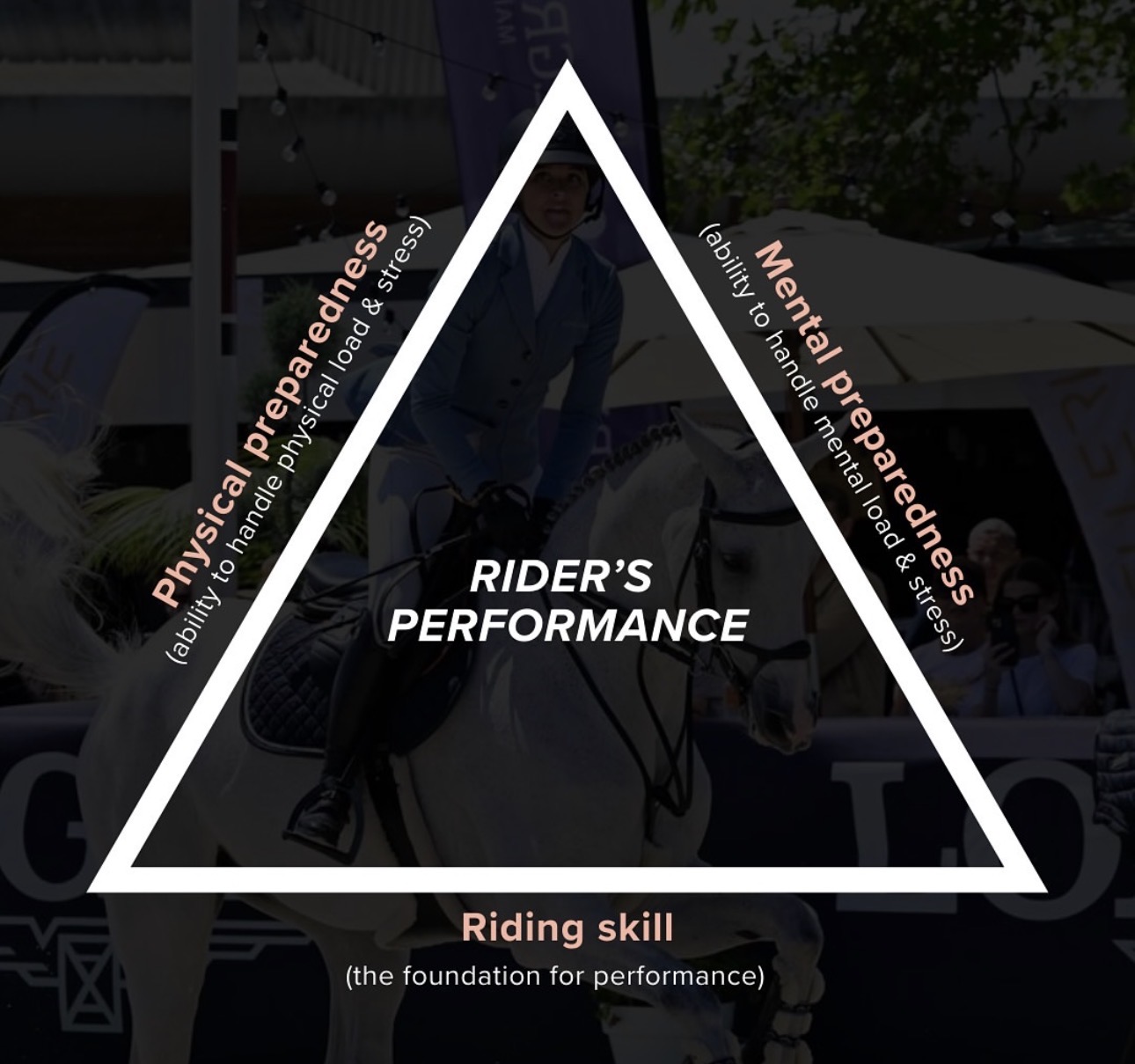
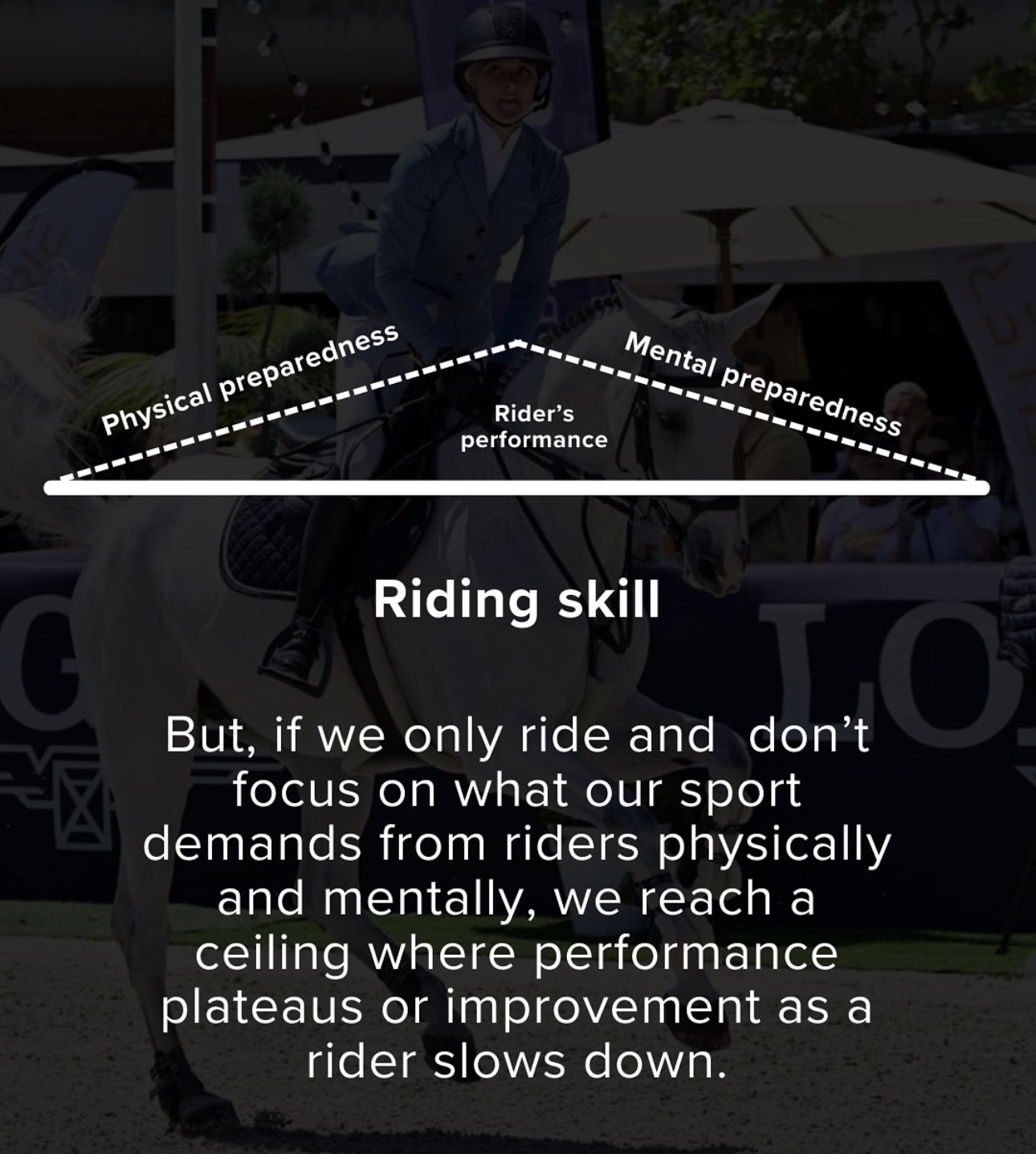


In my work I weekly see riders who feel their body is getting in the way of their riding and this is the framework that explains why.
The Rider's Performance Triangle starts with riding skill. The hours in the saddle, the feel, the connection with your horse. That is always the foundation to become a great rider and nothing will ever replace it.
But eventually, no matter how talented you are or how hard you work in the saddle, if you don’t pay attention to the physical and mental side of this sport, it starts to create this limiting ceiling for your riding development. And this is what I help riders with.
"No matter how talented you are or how hard you work in the saddle, if you don’t pay attention to the physical and mental side of this sport, it starts to create this limiting ceiling for your riding development. And this is what I help riders with."
Physical preparedness: what it actually means for a rider
Physical preparedness for riding is not about fitness in the general sense. It is not about being strong in the way a weightlifter is strong or fit in the way a runner is fit. It is about the specific physical qualities this sport demands and here is the part most riders don't realise: riding alone will not develop them. In fact, riding alone will actively work against some of them.
The three physical qualities that matter most are mobility, strength and aerobic conditioning.
Mobility
Mobility, and specifically hip mobility, is where most riders carry their biggest physical limitation, often without knowing it. The hip joint is a socket joint, designed to move in multiple directions. Riding is a highly repetitive and monotonous movement pattern for the hip, which means that if you only ride and do nothing else, your hips will get stiff.
Stiff hips make it difficult to sit deep in the saddle, to relax the leg long and around the horse, and to sit softly in your horse’s movements. Stiff hips also significantly increases the risk of lower back pain, which is one of the most common complaints among riders at every level.
The second most important mobility area is the thoracic spine. In order for your ribcage to stay aligned with your hips and for your body to follow your horse's movement with ease, you need the ability to rotate softly through your upper back.
Strength
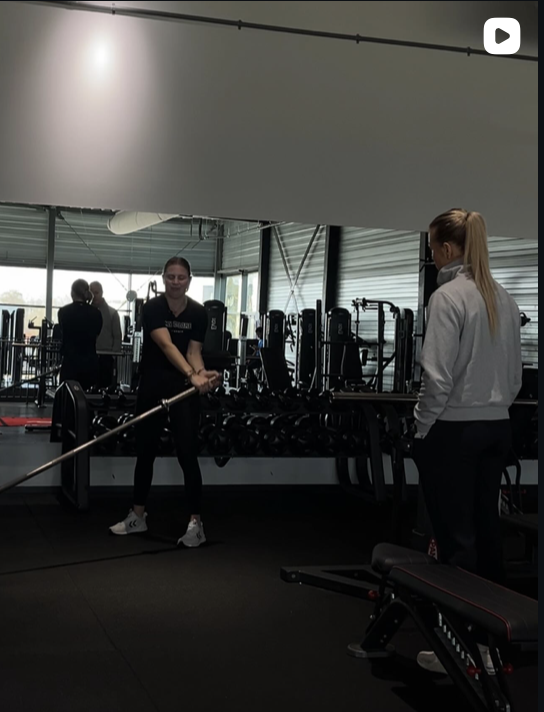
Strength training for riders is not about just getting strong in your core. It is about your muscle chains across your body working together. The foundation of a good seat is the alignment of your hips, ribcage and head and maintaining that alignment while a horse moves underneath you requires specific muscles doing specific jobs, constantly and without you having to think about it.
If the muscles are not doing their job, the position will always return to where ‘your default’ is. Research on rider biomechanics confirms what we see with the riders we work with: core stability and hip strength are among the strongest predictors of rider’s ability to use their seat effectively and their symmetry in the saddle, and weakness in these areas also shows up directly in how the horse moves.
Aerobic capacity
Aerobic capacity is probably the most underrated physical quality in equestrian sport, and the signs of having too little of it are there more often than most riders realise. And it is not just about getting out of breath while riding.
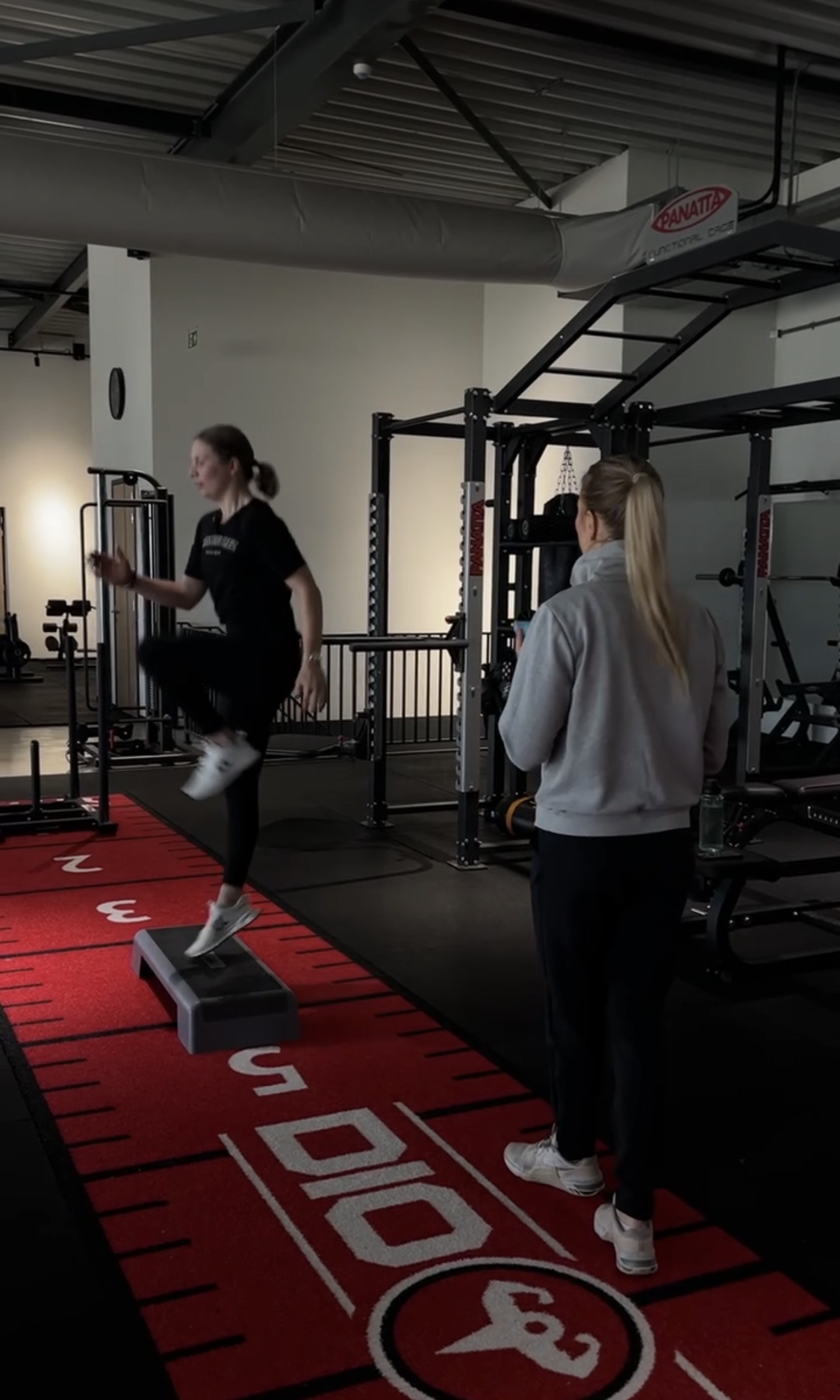
Lack of wide enough aerobic capacity shows up as a slower reaction speed, difficulty to focus, feeling tired all the time without a clear reason or getting ill more often than you should. Also, every quality that makes a great rider: reaction speed, body awareness, decision making, precision of aids, focus, flies out of the window the moment the demands of the sport become aerobically too challenging for your body.
Mental preparedness: what it actually means for a rider
Mental preparedness for riding is built in three layers, each one depending on the one beneath it.
The foundation is understanding who you are. Your personality, your values, what you want and more importantly, why you want it. Understanding your own drivers, the things that genuinely motivate you at a deep level rather than the goals you think you should have, is the starting point for everything.
The middle layer is mental skills. These are trainable tools that allow you to perform under pressure, to focus, to manage your nerves, to reset after a mistake and to build winning habits. These are skills in exactly the same way that a flying change is a skill. We need to remember that mental skills do not arrive automatically with experience and they do not improve on their own.
The top layer is performance: the ability to actually perform at your highest level when it counts. Many riders have a gap between what they can do in training and what they can consistently do at the competition. That gap is almost always a mental preparedness gap because the skill is already there.
"We need to remember that mental skills do not arrive automatically with experience and they do not improve on their own."
What happens when we miss out on physical and mental preparedness?
If the rider doesn’t focus on the physical and mental preparedness sides of the triangle, nothing dramatic usually happens. But the effect of that is more quiet and gradual, in the way that their riding performance problems build slowly over time until at some point they become impossible to ignore.
The goal is not perfection in all three. The goal is to acknowledge all three of them and develop all these sides together so that none of them becomes the thing that stops you.
Or at least the goal should be not to ignore two out of three completely.
Because the moment your physical and mental preparedness stop limiting your riding skill is the moment your development as a rider genuinely accelerates. And for most riders, that moment arrives way faster than they expect.
Simply because those two sides of the triangle have never been trained at all.
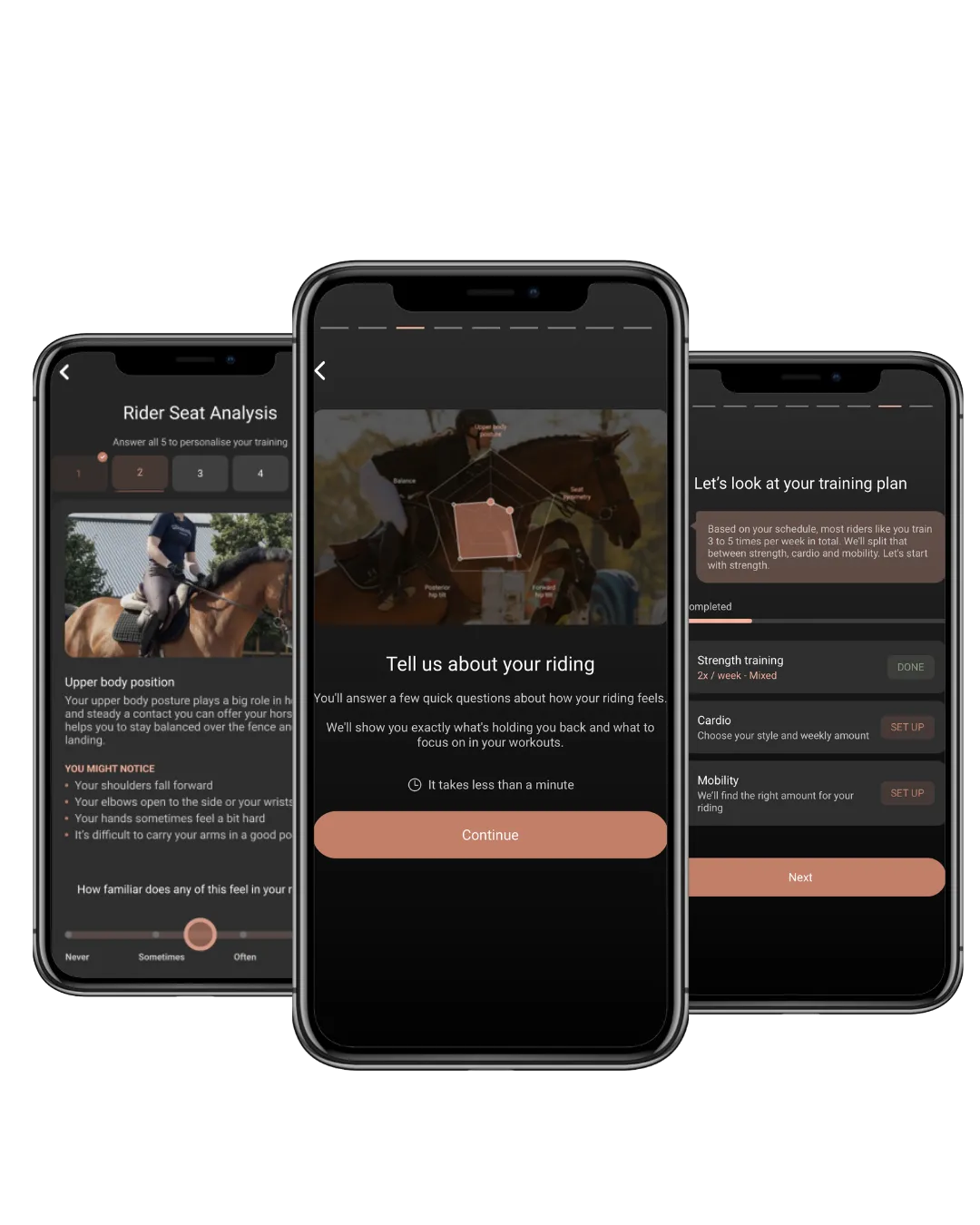
Get your Free Seat Analysis now
Get insights on your seat and know exactly how to train to improve.