The Long Game
Why gym training won't ruin your riding. And why riding alone won't fix it either.
There is a belief in equestrian sport that has been around for a long time and has quietly done a lot of damage. It goes something like this: "riders who train at the gym get too strong, too bulky, too muscular, and lose the softness and sensitivity that riding with harmony actually requires". That the gym and good riding are fundamentally in tension with each other. That if you want to feel the horse, you need to stay away from anything that looks like real athletic training.
I understand where it comes from. We have all seen riders who are stiff, who override, who hold too much tension through their upper body or their hand, and it is easy to assume that more strength training would make that worse. But the assumption is wrong, and it is costing riders big steps in their progress.
"There's a belief in equestrian sport that riders who train at the gym get too strong, too bulky and lose the softness and sensitivity that riding with harmony actually requires. But this assumption is wrong and it's costing riders big steps in their progress."
What the fitness industry sold us instead
Type "equestrian fitness" or "rider workout" into any search engine and look at what comes back. A woman on a yoga mat, green grass, something elegant and low-intensity, maybe Pilates, maybe a stretch sequence. The image is polished and it is peaceful and it is almost completely disconnected from what it takes to perform in this sport.
That image is not neutral. It is selling a belief about what rider fitness is supposed to look like, and that belief has shaped what most riders actually do when they decide to start training off the horse. They do yoga, they do Pilates and they focus on their core, because every trainer and every top rider they have ever followed online has told them that core is the key. And their core gets stronger, they get back on the horse, and the same problems are still there.
This is not because yoga and Pilates are wrong. It is because they were solving for one piece in a puzzle that has many.
What core strength actually does and does not do
Core workouts for riders matters enormously. Your core connects your hips to your upper body, which is what allows you to maintain a symmetrical and aligned seat in the first place. It resists rotation, which means it helps you and your horse stay straight. It creates rotation when you need it, through corners, through bending work, through lateral movements. And critically, it absorbs the movement energy coming from the horse underneath you so that you can follow that movement softly instead of bracing against it.
Research measuring the forces on a horse's back in sitting trot found that peak vertical forces from the rider reached almost three times their body weight in a single stride cycle (de Cocq et al., 2010). Your core is what manages that impact for both you and your horse. So yes, it matters. But it is one part of a much larger picture, and building it in isolation from the rest of the physical demands of riding is why so many riders also feel that 'workouts don't really work'.
The rider who is too strong is always compensating
Here is the piece that tends to surprise people. A rider who is rigid, who grips, who is strong with their hand is not too strong. They are compensating. Something in their movement chain is not working the way it should be, and the body has found a way around it, and that workaround almost always involves more tension somewhere higher up.
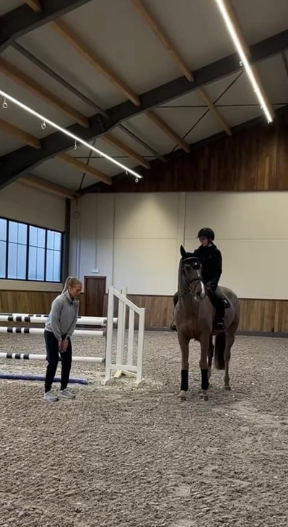
I worked with a young rider who tended to be strong in his hand after the jump. It was easy to see and his trainer had been working on it directly, trying to soften the contact and create more elasticity through the rein. But his hand was not the problem. His hips were tilted forward and that's why he could not connect through his core and engage his hip effectively, which meant the only communication tool he had available was his upper body. The hand was the symptom, the hip was the cause.
This is not unusual. When we look at contact with the horse, we cannot only look at where the contact is happening. We have to trace the connection backward through the whole body. The hand connects to the shoulder blade, the shoulder blade connects to the core through the obliques, the obliques connect the hips to the upper body. And, when the hips are centered and aligned, your communication with your horse can flow through the whole system softly and efficiently. When they are not, the body compensates, and that compensation shows up as tension wherever the chain breaks.
The fear of getting too strong from rider-specific gym training is unfounded. The risk of getting too strong comes from doing training that has nothing to do with riding, building mass and rigidity without any connection to the movement patterns the sport actually demands. It is not about the gym. It is about what you are doing there.
"The fear of getting too strong from rider-specific gym training is unfounded. The risk of getting too strong comes from doing training that has nothing to do with riding, building mass and rigidity without any connection to the movement patterns the sport actually demands."
What rider's gym training actually looks like
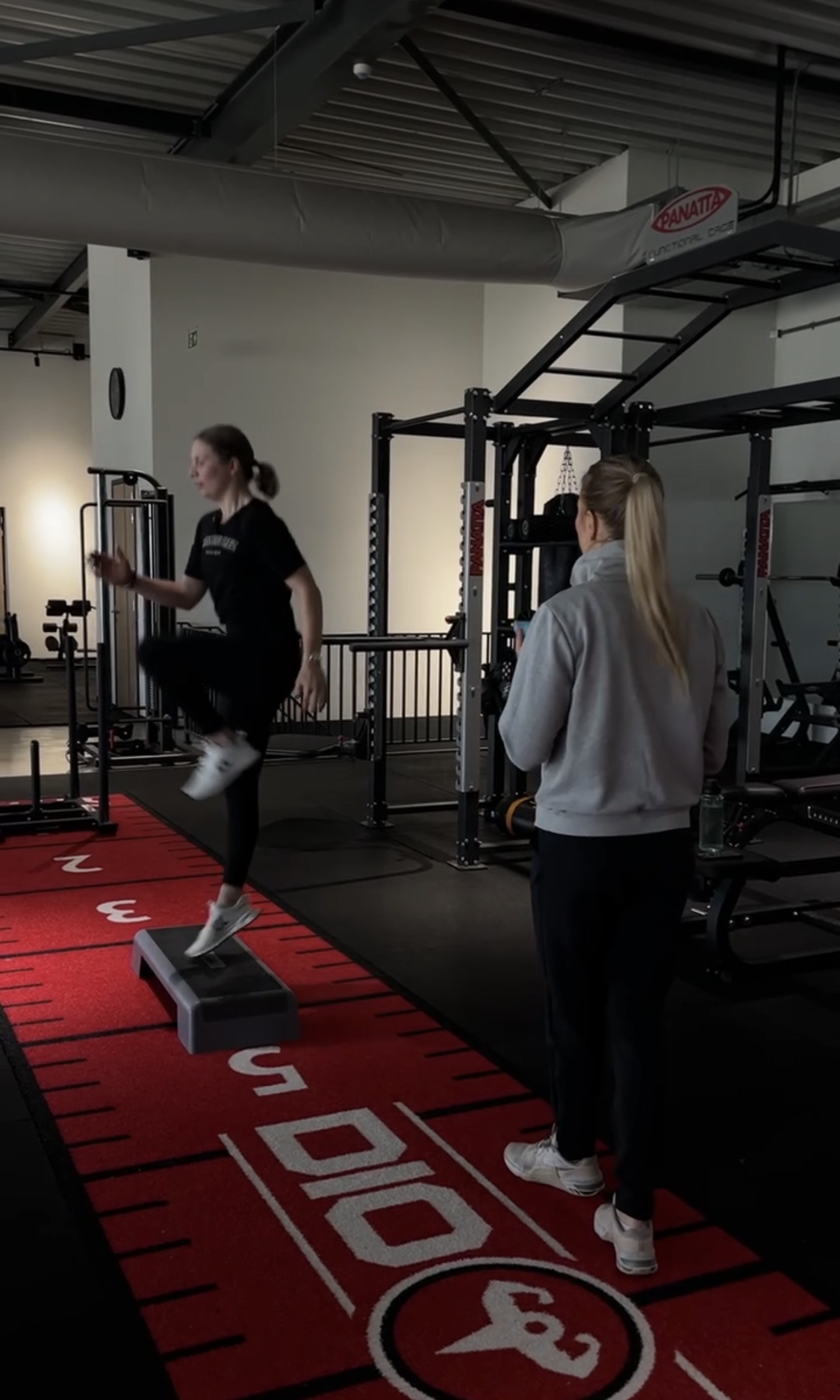
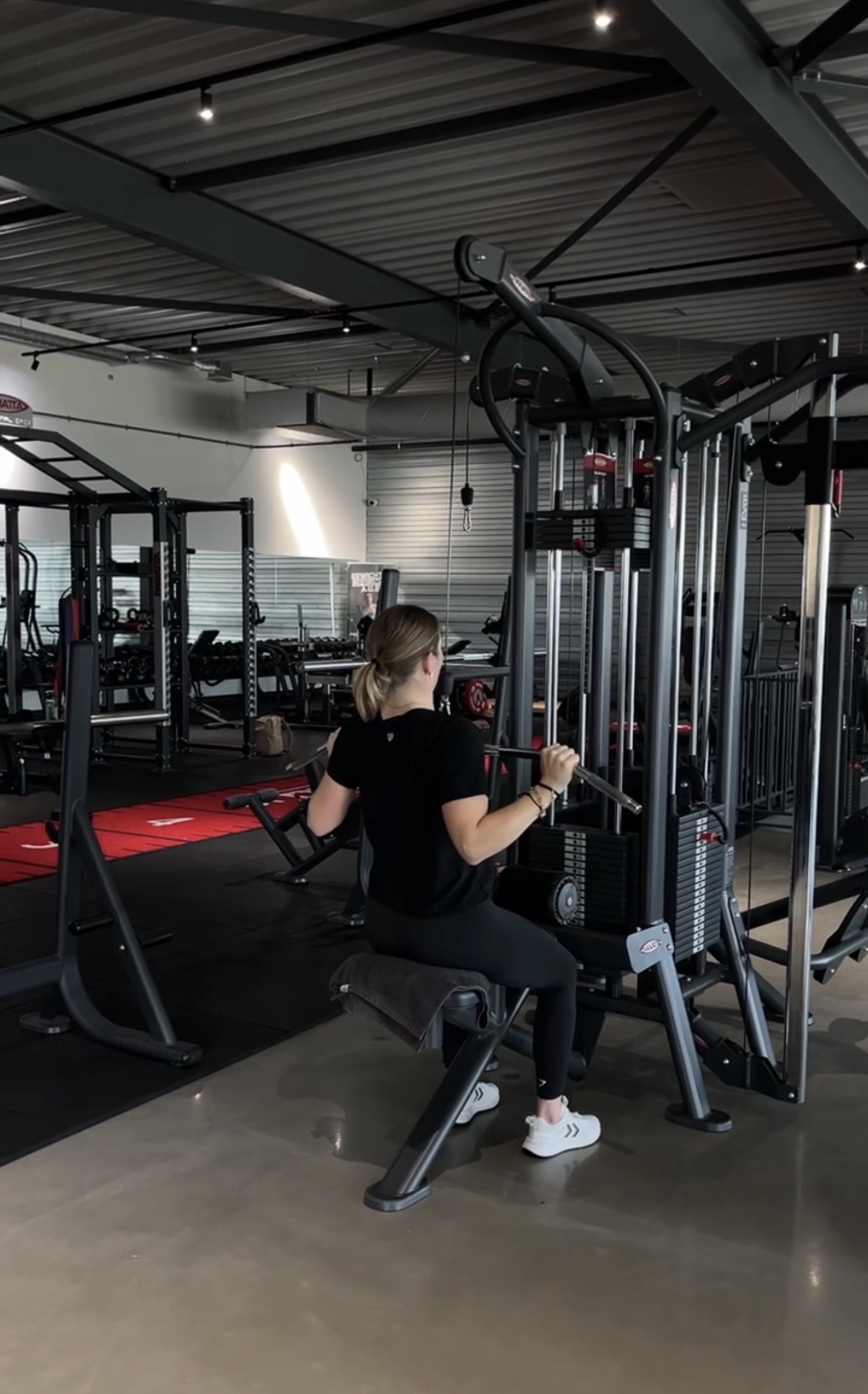
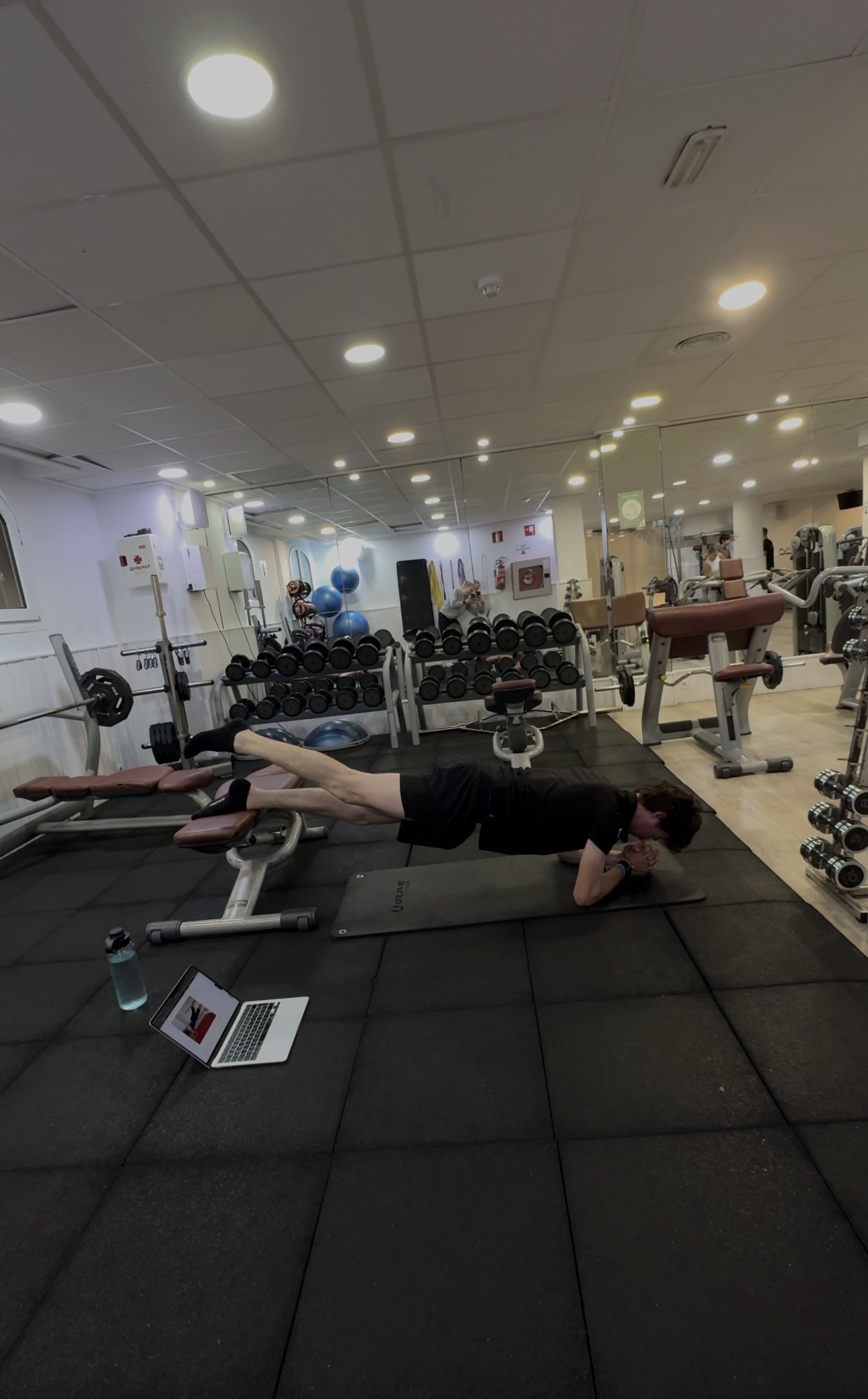
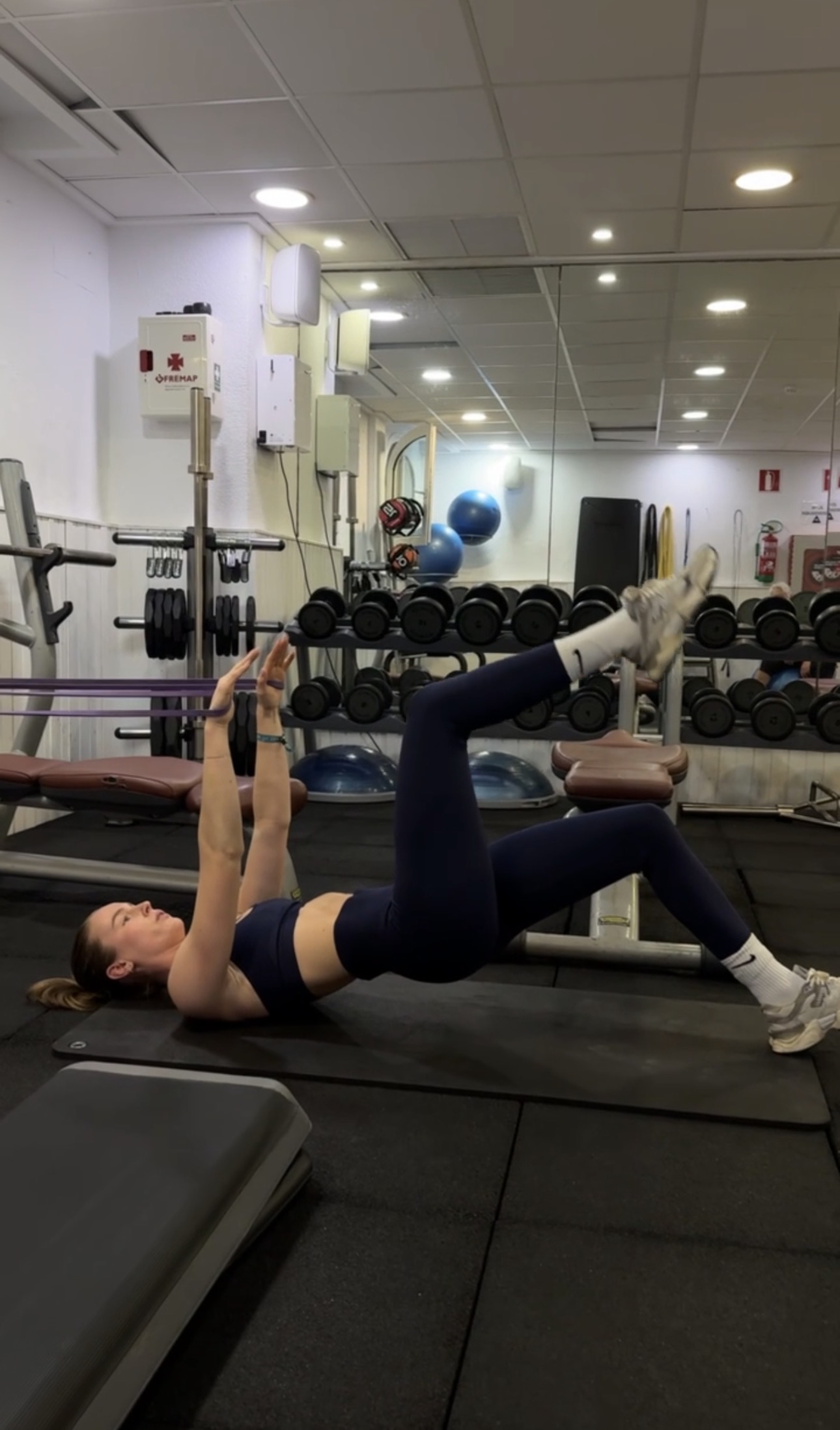
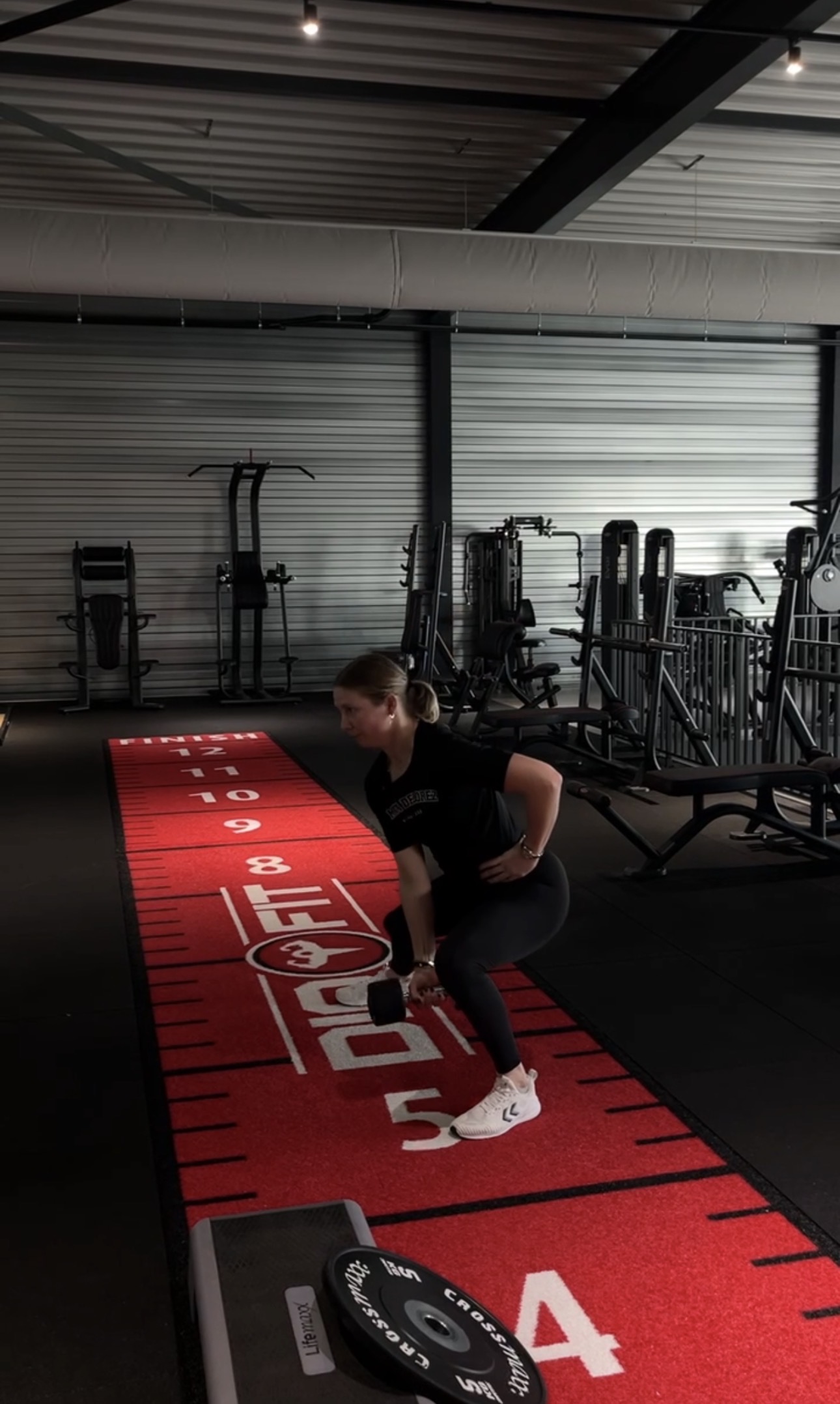
Rider training at the gym does not look like CrossFit, it does not look like bodybuilding and it does not look like what a fitness athlete does, because this is a different sport with different demands.
It starts with active mobility. Hip mobility, thoracic spine mobility, ankle mobility, which plays a larger role in your balance and stirrup contact than most riders realise. Not passive stretching at the end of a session but movement-integrated mobility work that is programmed into the warm-up and into the training itself, because the goal is not just range of motion in isolation but range of motion the body can actually use under load.
It includes unilateral strength work, training the left and right side separately, because that is precisely how the body needs to function in the saddle. One of the most underestimated benefits of this kind of training is the awareness it builds. When a rider starts to notice real differences between how their left hip moves compared to their right, they begin to understand their riding from the inside in a way that no amount of time in the saddle alone can create.
Research on young riders found that riding experience was significantly correlated with leg strength, hip mobility, and balance performance, suggesting that the physical qualities that matter most for riding are also the ones most responsive to targeted training (Demarie et al., 2022, DOI).
It includes anti-rotational work and rotational work, hip hinge patterns that are especially important for show jumpers staying in balance over and after the fence, leg stamina that matters enormously for eventers who need to remain efficient through a cross-country course, and postural strength work that allows dressage riders to hold an effortlessly good position without gripping or through the tests.
And everything, every exercise, every movement, is chosen because of what it does for what the rider needs in the saddle.
Why change happens faster than most riders expect
What riding requires is not large amounts of muscle mass. It requires awareness, mobility, and the right connections between the brain and the body. And the nervous system adapts quickly. Research reviewing neural adaptations to resistance training found that strength gains in the early phase of training are driven predominantly by changes in neural drive and motor unit firing patterns, not by muscle growth, meaning the body can start responding to the right input almost immediately (Gabriel et al., 2006).
This is why riders can feel a real difference in the saddle within days of starting training that is actually built around what their riding needs. Not because they suddenly became stronger but because for the first time, the work they were putting in was speaking the same language as the sport they were trying to improve.
The rider who has been working on the same problem for three years with limited results and the rider who changes it quickly are not doing a different amount of work. They are doing a different kind of work.
"This is why riders can feel a real difference in the saddle within days of starting training that is actually built around what their riding needs. Not because they suddenly became stronger but because for the first time, the work they were putting in was speaking the same language as the sport they were trying to improve."
This is why we built Equestrain App
If you have been trying to improve your seat and riding with workouts, but the general fitness approach you have been following has not transferred the way you hoped, the missing piece is not more effort. It is a plan that is actually built around what your riding needs.
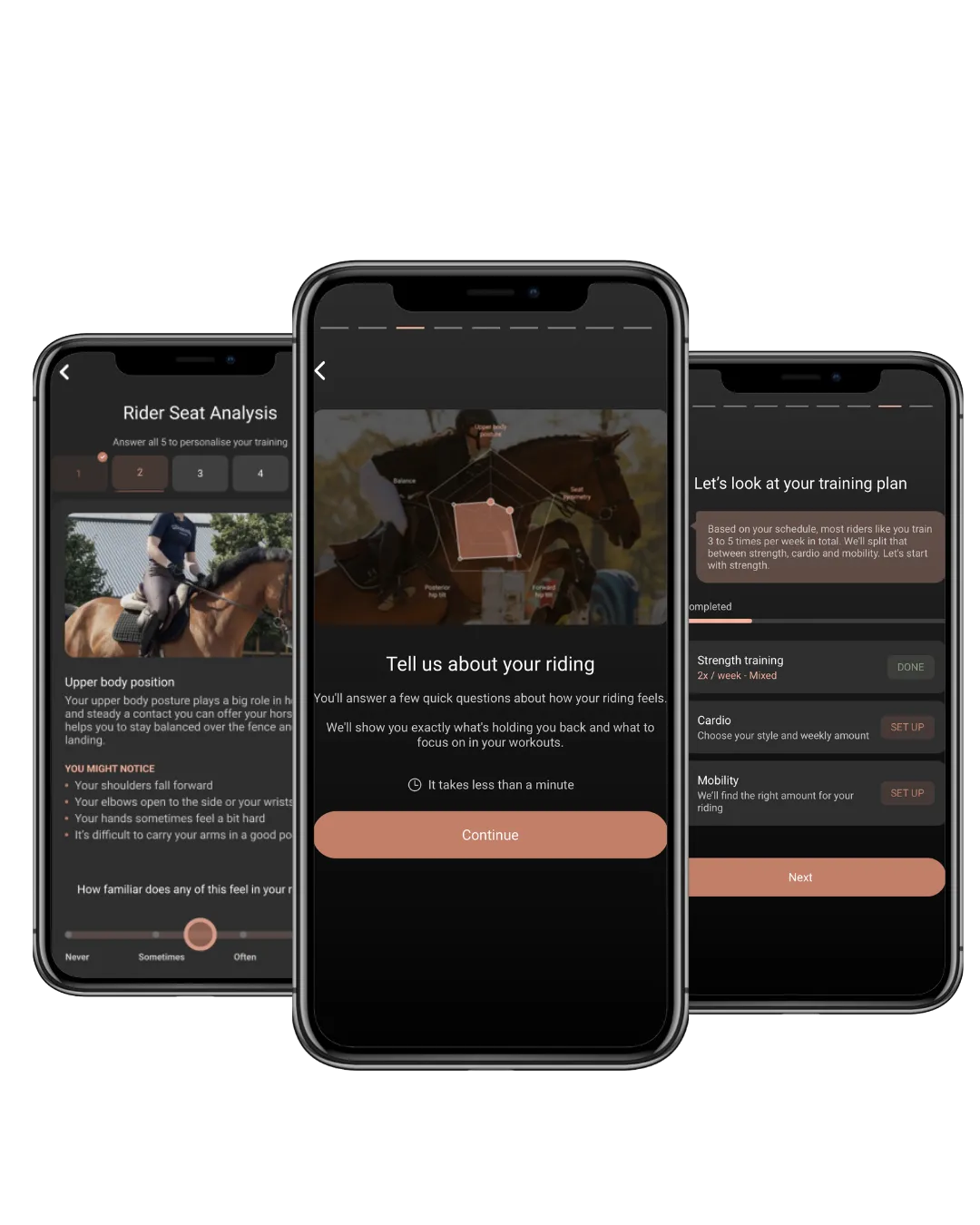
When you download Equestrain App, the first thing we do is ask you about your riding. What you feel in the saddle, what your trainer keeps correcting, w.hat you see when you watch your own videos. From those answers, we build you a program where every single movement is there for a specific reason connected to your seat, riding and your sport.
That is the difference. And it is the only one that actually changes things.

Get your Free Seat Analysis now
Get insights on your seat and know exactly how to train to improve.